Everyone learning another language needs practice to perfect their skills. What better way to help your international friends than offering a English conversation discussion? But what to discuss and how to prepare is a problem.
The discussion guides offer a quick solution. Pick a topic you or your friend would like to discuss. Each topic will print up on one paper, double sided. You will find basic vocabulary and concepts to discuss that will further their skills in reading, listening, and speaking. You will also find that you will learn about your friends’ countries, families, and values.
Everything is ready to go. You have sitting around you people from a variety of cultural backgrounds. The topic and questions lie before you. Take a deep breath.
How will you give everyone equal opportunity to speak? How will you keep the very talkative opinionated person from taking over? How will you encourage the quiet person to contribute? How will you give people the freedom to not contribute comfortably? How will you manage your own impulses to speak when the group may need a moment of silence?
Enter Mutual Invitation
Mutual Invitation is a way of facilitating discussions that takes care of each of the previous questions. Here is how it works. The facilitator asks one of the group to read an opening paragraph from the discussion guide. After that person reads, they will invite someone else to continue the reading or answer the first question. The invited person will answer or say pass. When they are done, they will invite someone else in the group to take the next question or read the next paragraph.
The facilitator may need to remind the person speaking to invite the next person. They also need to be aware of someone in the group that has not been called on.
It is that simple. But it is genius. For the woman, the less dominant culture, for the new person in the group, every one is welcome and given a voice.
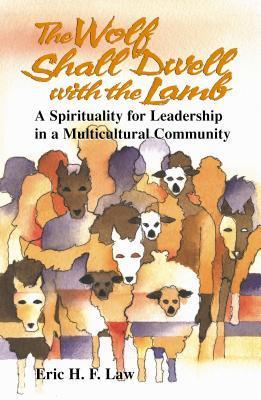
The credit for this method goes to Rev. Dr. Eric Law who wrote about the method in his book, The Wolf Shall Dwell With the Lamb, 113. Here at Bridges International, at Kansas State University, student leaders have easily picked up this system. It is easy to teach and easy to use. I have fewer worries about including everyone and keeping someone from taking over the conversation. I highly recommend this method. It works very well with the discussion guides on this website.
To thrive means to prosper or to flourish. The opposite is to decline or stagnate. All of us recognize when plants wilt and suffer due to inadequate water, fertilizer and sunshine. But what does it take for humans to thrive?
Thriving has been the topic for our international student discussion group as we gather for tea and snacks on Thursday afternoons.
We asked what are the necessities of life and what can we live without? Is it necessary to have purpose in life, good relationships, protection under the law, or to experience beauty in our surroundings?
Last week we asked if it were necessary to have a sense of awe and reverence from time to time. Everyone was quick to find a digital image of something that brought them awe. Mostly, people chose a beautiful landscape. Some pointed out the awesomeness of a great cathedral. One pointed to an awesome event of finding her phone in the middle of prairie grass just as the sun glinted on the screen at the end of the day. A few selected a person that brought them a sense of awe and reverence, such as Jesus Christ.
I wonder what brings you a sense of awe and reverence. Given how quick everyone was to show what brought them awe, I wondered if the need for awe and reverence demonstrates that people need to know there is a greater presence in this world, something that transcends the ordinary. For me that presence is God Almighty, Creator of heaven and earth; the same that sent his Son, Jesus Christ to bring us into a thriving relationship with him .
I wonder what helps you thrive and flourish?
Coming soon are the discussion guides for what it means to thrive.
Have you ever sung, The Twelve Days of Christmas? Most of us have no clue what the twelve days refer to. Do people celebrate Christmas for twelve days?
It turns out that the Christian church assumed that it took the wise men of the east twelve days to locate the baby Jesus after first speaking to King Herod in Jerusalem. According to the gospel of Matthew, chapter 2, the wise men were following a star that led them to the location where Jesus was, along with Mary and Joseph. There, in Bethlehem they presented their gifts of gold, frankincense, and myrrh. Therefore some Christian traditions give gifts on the 6th instead of December 25.
The name for this day is epiphany, a day when Jesus Christ was revealed to the non-Jewish people of the world (as represented by the eastern magi. Some Christian traditions also include the baptism of Jesus and his first miracle on this day).
Today, we might use the word epiphany in a loose sense, like a realization or understanding. Surely we need both at the start of a new year. We need a realization of who Jesus Christ is as a Savior and King. We also need help in understanding things that mystify us and the faith to accept the things we cannot understand.
As we enter a new year, I hope that God’s light through Jesus Christ will guide me through the difficulties I will encounter and give me hope in what I do not understand. I wish the same for you.
Happy New Year,
Jane
P.S. There is a lot of artwork from around the world that represents the eastern kings coming to Jesus. I hope you enjoy my two selections. Though depicted in different styles at different times, the intensity of the kings and the light coming from Jesus reflect the wonder of this day
Who would expect to find crocuses blooming after two hard frosts in October in Kansas? Not I, but there they were as a rode my bike down the hill and into my driveway. Their beauty took my breath away.
But if we look we find a lot of unexpected pleasure all around us. I meet international students who push through difficulties of mental health, demanding academics, family problems, and home country upheavals, in order to achieve the goals they set for themselves. Their courage takes my breath away. I am honored to be a small part of their story. And I thank God for them.
How about you? Where do you come face to face with unexpected pleasure?
Three years ago, the Conversation Art Cards were published by CruPress. They are a pack of 25 cards each with a great work of art on one side and 4 questions on the back.
The first question asks the participants to describe the image they see on the other side.
The second question asks about a personal experience or opinion about the topic related to the image.
The third question has part a and b. Part a has a quote from a recognizable source and part b has a quote from the Bible. These quotes are tied in with the topic and image.
The fourth question ties the topic and the image together and asks the participants to either draw or find a digital image to illustrate their thoughts.
The images draw out the imagination and the topic draws out one’s experience and thoughts. Both are valuable for engaging English conversation practice.
But there is more.
These cards provide an opportunity to get to know your friend in a whole new way. Do you know what music they prefer and why they listen to it? Do you know what fears they have or who or what they admire? Do you know their cultural value of honor/shame, guilt/innocence, or fear/power?
Do you have a favorite card game? Recently I picked up this deck of playing cards from the local book shop. Each card has slang phrase on it like, “You bet, couch potato, That hit the spot, kudos.” Underneath the phrase, they tell you what the phrase means.
I found the card game, “Crazy Eights” easy to teach. Remember Uno? My guess is the the creator of Uno got the idea from the older card game, Crazy Eights. When I play this with my English conversation group, every time a person discards, they read the phrase. Then, I explain it, use it in a sentence, and they have to try to use it in a sentence. This procedure brings a lot of confused looks and laughs.
The last time I met with my two friends, one speaks Persian and the other Spanish, I gave them three random cards and asked them to tell a story with the three cards. Challenging? For sure! Funny stories? You bet!
Try it. Here are three examples of slang. “Pass the buck. For the birds. Come on.” Now it’s your turn. Let me know what you come up with.
It is no secret that COVID brought a lot of stressors into our lives. Here is a summary about college students, the world over.
“Chegg.org asked about online learning, the cost of education, mental health, and more. This study deserves serious attention from anyone concerned with international education and the well-being of students. One significant finding: 56% of students surveyed said their mental health suffered during the period of Covid. 81% of students surveyed said their stress and anxiety have increased; 15% contemplated ending their life. Over 500 students surveyed, over 3%, attempted to kill themselves; the percentages were highest in Saudi Arabia, Brazil, USA, South Korea, Russia, Malaysia, Australia, India, Canada, and China” (Dr. Christopher Sneller).
It is no secret that people from all times and all walks of life have suffered from mental and emotional stresses due to difficulties they endured. I wondered about their lives; how did they handle things like depression, anxiety, loneliness, and anger? One of the most ancient and yet most relevant resources promises to give us a window into their lives. That resource is the Bible. People like Job, Paul, Elijah and various poets write about their anguish and resolutions.
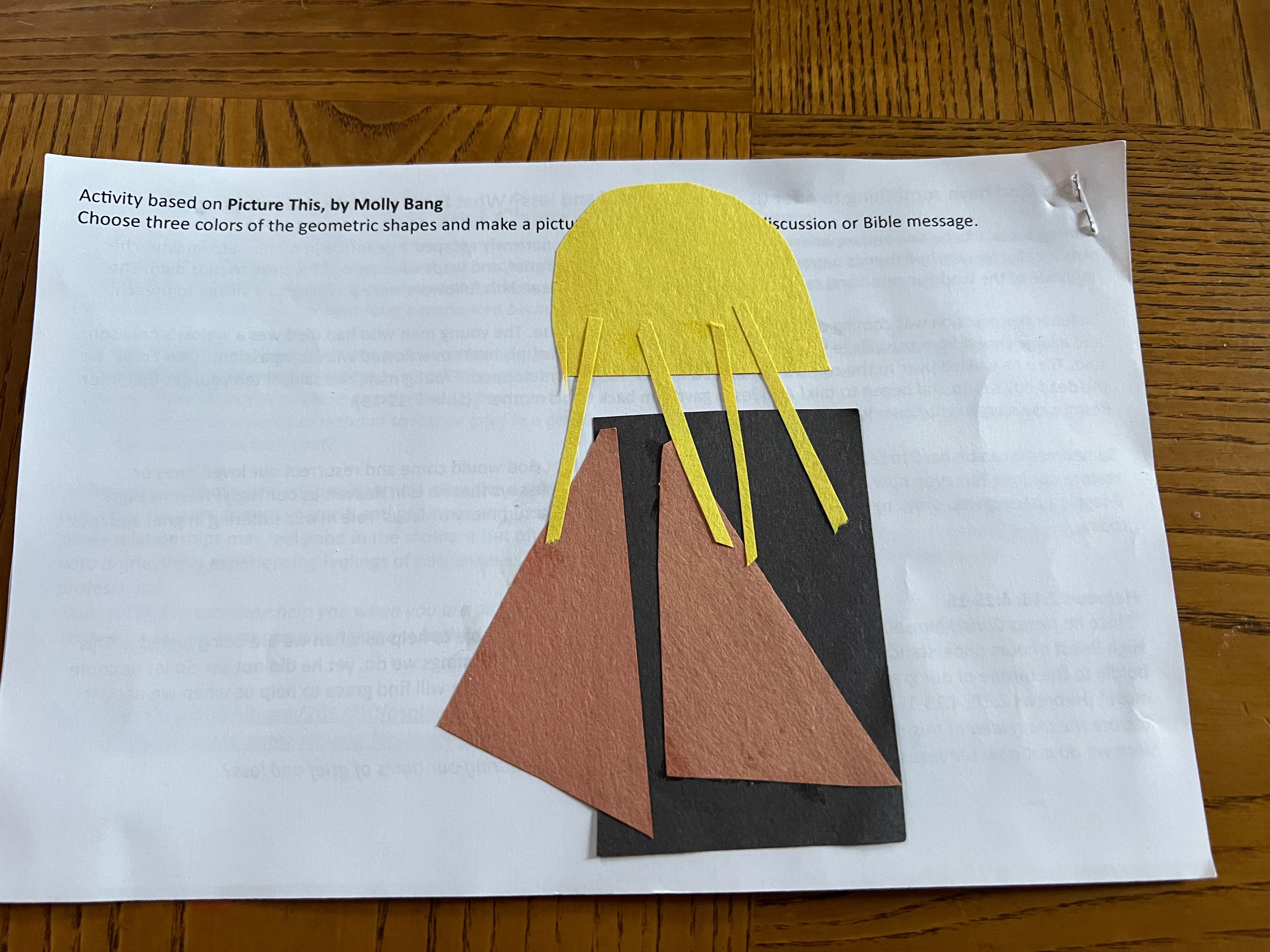
Chai and Chat is a weekly meeting we (Bridges International) host for international students at Kansas State University. This fall, we tackled the topic of mental health by defining terms, listing resources, and reading and discussing what the Bible says about these topics. We ended each session with an art project using geometric shapes of three colors glued to a piece of paper. (We followed the method demonstrated and explained in Picture This, by Molly Bang.) Then we shared what we created. Some of the images reflected their own experience with things like anxiety and depression. Others retold the story or advice from the Bible. The discussion guides are now available from the tab at the top of this page. I hope you find them helpful.
An international student told me a professor looked over his paper and made a few suggestions. “You might think about changing page 2 and consider again what you wrote on page 9.”
My friend told me, ” I thought about changing page 2 and I read again what I wrote on page 9, but I decided not to change it. When I met with my professor again and he saw I made no changes, he was upset with me. But why? He asked me to think about it, not to change anything. So I considered but I decided what I wrote was good, so I left it.”
What happened? One person, the professor came from a culture of where requests to change come in the form of a suggestion. The student came from a culture where a suggestion is just a suggestion. Telling a person to change something comes in the form of, “Change this.” No wonder each person was confused.
Erin Meyer’s book, The Culture Map, takes eight topics of cultural confusion and helps the readers sort how each culture sees things. Included is a diagram which shows how countries tend to behave. Below are the topics.
Navigating Cultural Ways of Doing Things
Communicating: explicit vs. implicit
Evaluating: direct negative feedback vs. indirect negative feedback
Persuading: deductive vs. inductive
Leading: egalitarian vs. hierarchical
Deciding: consensual vs. top down
Trusting: task vs. relationship
Disagreeing: confrontational vs. avoid confrontation
Scheduling: structured vs. flexible
The discussion guides are found by going to “Eight weeks of Conversation Cafe.”
Best wishes for successful English conversations this fall, 2021 and beyond.
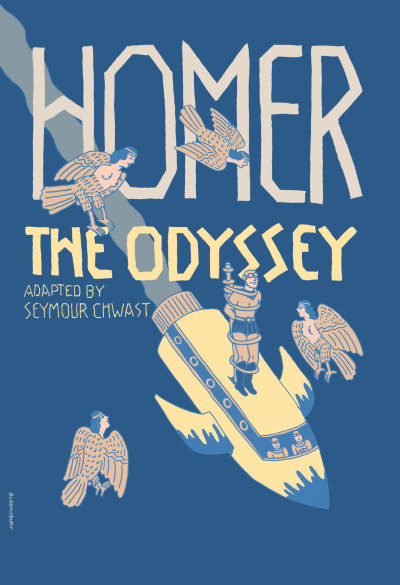
While reading in the public library, I noticed this book on the shelf under the sign, “Graphic Novels.” I have to admit I have never read Dante’s Divine Comedy and I was pretty sure I would not devote myself to it any time soon. In no time at all though, I was entranced by the superb drawings. Within a few hours, I completed the book, grasping for the first time what the poem was all about.
As I meet with international students to help with their English conversation, I suggest reading graphic novels. For one thing, it is easy to read through the book quickly because the word count is limited. The graphics fill in the details. Graphic novels are not just for children who like to read about superheroes like Spiderman. Graphic novels range in the category of fiction and nonfiction such as history and biographies. All of these books and topics lend themselves to great conversation.
We are only in the middle of July. Visit your public library and you are sure to find something that interests you and your friends.







 International Conversation Cafe